

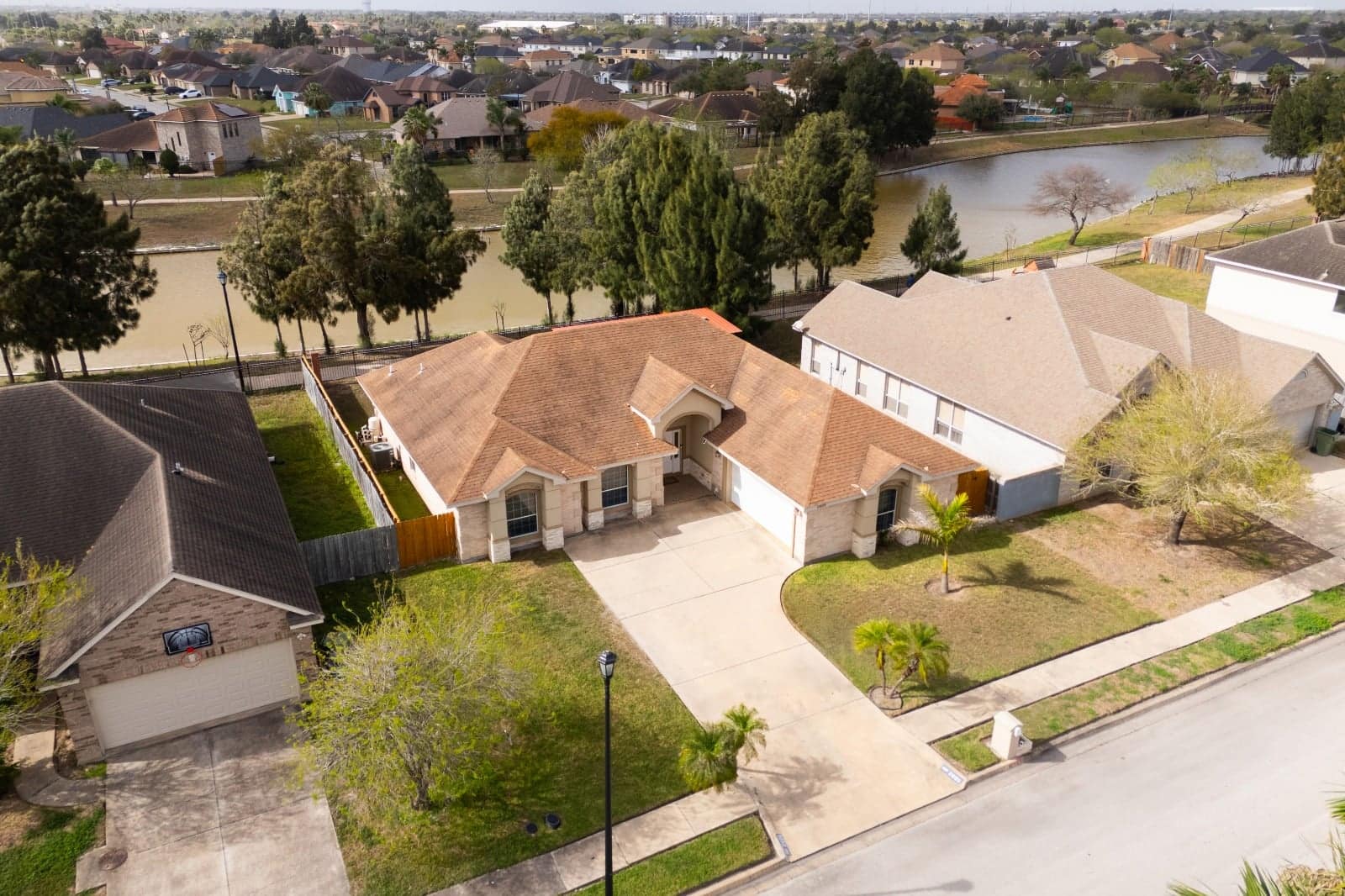
If you’re wondering about your RGV home value, you’re probably asking one of the most important questions a homeowner should answer before selling: How much is my house worth?
The answer may seem as simple as entering your address into an online home-value estimator. However, determining a realistic potential selling price for a Rio Grande Valley home requires more than a computer-generated number.
Two homes in the same neighborhood can have the same number of bedrooms and similar square footage but sell for different prices. Condition, renovations and lot size can make a difference. Location within the neighborhood, comparable sales, current competition and buyer demand can also influence what the market may support.
What Determines Your RGV Home Value?
There isn’t one number that automatically determines your RGV home value or what a buyer may ultimately pay for your property.
A useful starting point is to examine comparable properties, often called “comps.” These are recently sold homes that are reasonably comparable to yours in location, size, age, condition and features.
But selecting useful comparable sales involves much more than finding three houses nearby.
- Location: Buyers may value two nearby subdivisions differently. Even location within the same neighborhood can matter.
- Living area and layout: Square footage matters, but so does how effectively the home uses that space.
- Age and condition: A well-maintained home may compete differently from a similar property that needs significant repairs or updating.
- Renovations and features: Kitchens, bathrooms, roofing, flooring, pools and outdoor living areas can affect buyer appeal. However, an improvement does not necessarily add its full cost to a home’s selling price.
- Lot and property characteristics: Lot size, frontage, privacy, parking and other physical characteristics may distinguish one property from another.
- Current competition: Your home does not enter the market in isolation. Buyers will compare it with other homes available at the same time.
- Market conditions: Inventory, buyer demand, financing conditions and recent sales activity can influence pricing and negotiating leverage.
The goal isn’t simply to find the highest-priced house that sold nearby. Instead, the goal is to identify the properties that provide the most meaningful comparison with yours. Those sales can help show what buyers may be willing to pay today.
How Accurate Are Online Home-Value Estimates?
Online tools can provide a useful starting point when researching your RGV home value. However, you should not confuse them with an appraisal or a property-specific pricing analysis.
Automated valuation models use available property information, market data and recent sales to generate estimated values. Their biggest advantage is speed. A computer can analyze large amounts of data almost instantly.
The limitation is that an automated model may not fully capture what is happening inside your particular home. It also may not know how buyers will respond to its individual characteristics.
For example, a model may not fully account for a remodeled kitchen, deferred maintenance or a superior lot. An unusual floor plan or other property-specific characteristics could also influence a buyer’s decision.
Zillow explains that its Zestimate is a computer-generated estimate of a home’s market value and is not an appraisal. Zillow also recommends supplementing a Zestimate with additional research. That research can include a comparative market analysis from a real estate professional.
Is Your County Appraisal the Same as Your Selling Price?
Another number homeowners often consider is the value shown by their county appraisal district.
That number is important for property-tax purposes. However, you should not automatically treat it as the price your home would sell for today.
According to the Texas Comptroller of Public Accounts, with limited exceptions, Texas appraisal districts appraise taxable property at market value as of January 1.
A homeowner preparing to sell is asking a more immediate question. What estimated sale price might the market support based on the property’s characteristics, relevant recent sales, competing listings and current conditions?
Your appraisal-district value and potential selling price may sometimes be close. They can also differ. Market conditions can change during the year, while individual property characteristics can affect how buyers compare one home with another.
How a Comparative Market Analysis Helps Estimate a Selling Price
A comparative market analysis, commonly called a CMA, is one tool a real estate professional can use to help a homeowner better understand a property’s potential home value and selling price.
A CMA can examine relevant recent sales, properties currently competing for buyers and characteristics of the home being analyzed. Depending on the circumstances, pending sales and listings that failed to sell can provide additional context.
Current listings show the choices buyers have today. Closed sales show what buyers have actually been willing to pay. The analysis becomes more useful when the comparable properties genuinely resemble the subject property rather than simply being nearby.
Texas also makes an important distinction between a CMA and an appraisal. Under Texas Real Estate Commission rules, a CMA or broker price opinion from a real estate license holder provides an estimated sale price. It is not the same as an appraisal developed by a licensed appraiser.
For a homeowner considering a sale, a property-specific market analysis can provide useful information. It can help you decide how to position your home against its current competition.
Why the Highest List Price Isn’t Always the Best Price
It’s completely understandable for a homeowner to want the highest possible price for a property. But understanding your home’s market value is different from simply choosing the highest possible list price.
There is an important difference between trying to maximize your net proceeds and simply choosing the highest possible asking price.
Buyers can compare your property with other homes for sale. If your asking price is significantly disconnected from competing properties and relevant recent sales, some buyers may look elsewhere.
On the other hand, pricing a property below what the market supports can leave a seller wondering whether more could have been achieved.
Your Selling Price Isn’t the Same as Your Net Proceeds
Knowing your potential RGV home value is important. But homeowners should also understand the difference between list price, sale price and net proceeds.
- List price: The price at which the property is offered for sale.
- Sale price: The price ultimately agreed to by the buyer and seller.
- Net proceeds: What remains for the seller after applicable transaction expenses, mortgage payoff, credits, concessions and other closing adjustments.
Your RGV home value can help establish expectations for a potential sale, but the final contract terms matter too. A seller can receive an attractive purchase price and still have different net proceeds depending on the terms of the transaction.
That’s why an offer should be evaluated beyond its headline price. Financing, requested concessions, closing expenses, repairs and timing can affect the overall transaction. Other negotiated terms can matter too.
Some expenses are also negotiable. For example, the Texas Department of Insurance states that a buyer and seller may negotiate who pays the title-insurance premium.
So when an offer arrives, an important question isn’t simply:
It is also:
Do Home Improvements Increase What Your House Could Sell For?
Improvements can influence your RGV home value and how buyers perceive your property. However, homeowners shouldn’t assume that every dollar spent on an improvement creates an additional dollar of selling price.
Some improvements may make a home more competitive or improve its condition relative to comparable properties. They may also make the property more appealing to a larger group of buyers.
Other projects may reflect personal preferences that a future buyer does not value as highly as the homeowner does.
Before spending heavily on renovations specifically for a sale, consider how the home currently compares with competing properties and recent sales.
Sometimes substantial work may be appropriate. In other situations, cleaning, decluttering, landscaping, paint, minor repairs and better presentation may be more practical before listing.
How Have Rio Grande Valley Home Prices Changed Over Time?
The price you paid for your home is part of its history. However, it does not determine what the property could sell for today.
RGV home values have changed substantially over the past decade. I took a deeper look at those long-term changes in my 10 Years of Home Appreciation in Hidalgo and Cameron Counties analysis.
Broad appreciation trends still can’t tell an individual homeowner exactly what a particular property could sell for. Real estate becomes more specific as you move from the Rio Grande Valley to a city and then to a neighborhood. Ultimately, the individual property matters.
Current conditions matter too. My RGV Housing Market Report tracks changes in inventory, sales activity, prices and selling times across the region.
What Should You Do Before Selling Your RGV Home?
If you’re considering selling, you don’t have to decide today that you’re ready to put a sign in the yard.
Start with information.
- Review relevant recent comparable sales.
- Look at the homes currently competing for buyers.
- Consider your home’s condition and features relative to those properties.
- Think about your timeline and why you are considering a move.
- Estimate your mortgage payoff and potential transaction expenses.
- Compare potential sale scenarios based on your priorities rather than focusing only on the list price.
Once you understand your potential RGV home value and the other numbers involved in a sale, you can make a more informed decision about whether selling now makes sense for you.
Curious About Your RGV Home Value?
You don’t have to be ready to list your home to start understanding its potential selling price.
If you’re considering selling now or simply planning ahead, I can review your property and relevant comparable sales. I can also look at current competition to help you understand where your home may fit in today’s Rio Grande Valley real estate market.
Request a Home Value Analysis →
Any comparative market analysis or estimated sale price prepared by a Texas real estate license holder is not an appraisal. Actual market response, offers, contract terms, expenses and final sale price can vary. This article is for general informational purposes and is not legal, tax, appraisal or financial advice.
Sources: Texas Real Estate Commission; Texas Comptroller of Public Accounts; Texas Department of Insurance; Zillow Zestimate.
